Diabetes is more than a high reading on a glucose meter. It is a metabolic condition in which glucose regulation becomes insufficient, with potential consequences for blood vessels, kidneys, eyes and nerves. Effective care addresses blood glucose, cardiovascular health and quality of life together. A person may need treatment even when they have no pain and feel well. [1]
Why blood glucose rises
Insulin helps the body use and manage glucose. In type 1 diabetes, insulin production is severely impaired, usually through an autoimmune process, and insulin treatment is essential. In type 2 diabetes, insulin resistance is accompanied by the pancreas being unable to compensate adequately. Gestational diabetes develops during pregnancy and requires specific care. The type of diabetes changes treatment decisions. [1] [4]
Glucose is a necessary fuel for the body. The problem is its regulation, not simply the existence of carbohydrates. Assuming that everyone with diabetes must completely remove fruit, bread or familiar meals can cause confusion and make choices difficult to sustain. Amounts, distribution and the overall eating pattern deserve individual discussion.
What tests tell us—and what they do not
Diagnosis relies on validated tests interpreted by a clinician in context. A home meter is useful for monitoring, but one reading does not explain the whole situation. HbA1c provides a picture of glucose exposure over recent months; daily measurements show variations related to meals, activity and treatment. [1] [2]
Targets need to be personalised. Age, hypoglycaemia risk, pregnancy, other illnesses and medication type influence the plan. Rather than comparing yourself with someone else's results, understand the ranges you are aiming for, when to measure and what to do if readings repeatedly fall outside them.
An eating pattern you can maintain
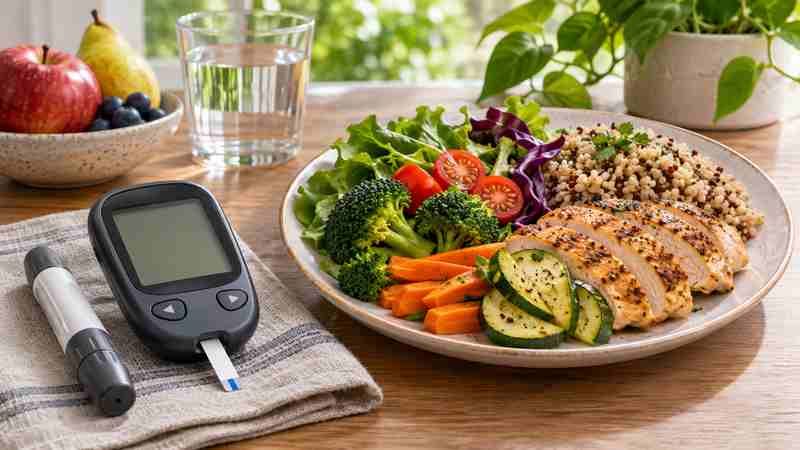
A good eating plan needs to work in real life: at work, with family and when time is limited. Look at portion sizes, sweetened drinks, frequent snacks and the composition of meals. Vegetables, protein sources and fibre-rich foods can form part of a balanced pattern adapted to preferences and any necessary restrictions. [2]
A practical change is to record what you eat for a few days and how glucose behaves, following the monitoring advice you have received. This may reveal where an adjustment would help. Avoid turning every meal into a moral test: a higher result is information for reviewing the plan, not proof of personal failure.
Activity, sleep and treatment
Regular physical activity is part of care alongside nutrition and medicines. Intensity and progression should reflect fitness and existing complications. People using insulin or certain tablets need to discuss prevention of exercise-related hypoglycaemia. Inadequate sleep and emotional difficulties also deserve attention because they can make daily management harder. [2]
Do not stop treatment because readings improve after a few days. Good glucose levels may show precisely that the plan is working. Dose changes should be agreed with the care team using measurements and individual risks. Remission is possible for some people with type 2 diabetes, but it does not make continued monitoring unnecessary. [3]
Look for complications before symptoms appear
Reviews should not focus on glucose alone. Blood pressure, blood lipids, kidney assessment, eye examinations and foot care can identify problems that are not yet painful. Stopping smoking is particularly important. Ask for a written schedule of checks and bring previous results to appointments. [2]
Supplements: questions before buying
Evidence for many supplements promoted for diabetes is limited or inconsistent. A studied ingredient does not establish the effectiveness of a commercial combination, and some products can cause adverse effects or interactions. “Natural” does not rule out kidney risks or excessive glucose lowering in certain combinations. [3]
- Ask what measurable benefit is being sought and when it will be reviewed.
- Disclose all medicines and related health conditions.
- Do not replace insulin or prescribed treatment with a supplement.
- Keep a clear plan for glucose levels that are too low or too high.
Confusion, unconsciousness, persistent vomiting or unusual breathing, especially alongside abnormal glucose readings, require urgent medical help. Do not give food or drinks to an unconscious person. Follow the emergency plan agreed with your clinician and call the local emergency service when the situation is severe.
An example of meaningful monitoring
Imagine you repeatedly notice elevated readings at a particular time of day. Instead of changing medication and meals at random, record the time, preceding meal, activity, intercurrent illness and any missed doses. Take only the measurements recommended in your personal plan. This chronology helps the clinician distinguish a pattern from an isolated event.
Bring your meter or available report to the consultation, rather than only the best or worst reading. Ask which change has priority and how long its effect should be observed. If several things change simultaneously, it becomes difficult to identify what produced the result and what can be maintained safely.
Preparing for unusual days
Travel, infection, delayed meals and loss of appetite can disrupt routines. Request written instructions about monitoring, medicines and when to contact a clinician. For people using insulin, missing a meal does not automatically mean stopping every dose; the rules depend on the prescribed regimen and circumstances.
Keep your care team's contact details and treatment information accessible. Those close to you should know how to recognise a serious situation and which plan you have received. Simple organisation reduces improvised decisions at the very time when fatigue or symptoms make judgement more difficult.
FROM OUR CATALOGUE
MEDICINAS products

Insuveg Forte – 90 cps
Insuveg Forte contains ingredients including bitter melon, bilberry, turmeric, gymnema and chromium, according to the catalogue. We recommend reviewing its composition with your diabetes clinician before use, particularly if you take insulin or medicines that can lower blood glucose. It does not replace treatment and has no demonstrated clinical effectiveness for preventing diabetes complications. Kidney disease requires additional precautions.
View ingredients and precautions ↗References and sources
Sources consulted on 10 November 2026. Health education material prepared by the MEDICINAS editorial team.